How Home Window Tinting Cuts Energy Bills

How Home Window Tinting Cuts Energy Bills

A July electric bill in Radcliff has a way of narrowing a homeowner's attention. The west-facing living room, the one with the picture window that catches the afternoon sun as it drops toward Fort Knox, holds heat well past sunset. The thermostat climbs, the HVAC cycles harder, and the utility statement at the end of the month reads exactly the way the house feels. Across Hardin County, from the older subdivisions along Wilson Road to the newer developments north of Radcliff to the family housing that serves Fort Knox, the common factor is glass. Untreated windows are the single largest thermal vulnerability in most Kentucky homes, and home window tinting is the surface treatment that addresses the problem directly at the pane.

Why Radcliff Summers Load a Utility Bill Through the Glass

Solar heat gain is not a metaphor. It is a measurable transfer of radiant energy from sunlight, through the window, into the room. Every square foot of glass on a west or south exposure through the humid stretch from May to September collects that energy, and Kentucky humidity makes the load worse because moist air holds and moves heat differently than dry air. A room does not need to be in direct sun to feel it.

Solar energy passes through untreated glass in three overlapping bands: visible light, ultraviolet, and infrared. Visible light is the part the eye reads as brightness. Ultraviolet is the invisible band that fades interiors. Infrared is the invisible band that carries most of the felt heat. A window that lets all three through hands the air conditioner a job it did not need to have. That is why home window tinting, chosen and installed correctly for the glass it sits on, changes what shows up on the utility bill.

Untreated windows waste heat

Roughly 30 percent of residential heating and cooling energy moves through untreated windows, according to U.S. Department of Energy public education materials. Adding a properly matched solar control film to the glass reduces the share carried by radiant transfer.

Ultraviolet drives most fading

Independent conservation research on interior fade attributes the majority of damage to ultraviolet radiation, with visible light and heat contributing the rest. Modern residential window films can cut a large share of the ultraviolet band, which is why fade protection often shows up before the utility bill does.

Ceramic beats older metalized film

Nano-ceramic residential films use non-conductive particles to reject infrared, which is why they do not interfere with cellular, Wi-Fi, or GPS signals inside the home the way older metalized films sometimes did. Manufacturer datasheets across the ceramic category confirm the signal-neutral behavior.


Social Media

What Residential Window Film Actually Does at the Glass

Residential window film is a thin, multilayer construction. A polyester substrate carries the optical function. A scratch-resistant hardcoat protects the interior side once the film is bonded to the pane. A pressure-sensitive adhesive holds the film in place. In higher-performance residential films, a nano-ceramic layer sits inside the stack and does most of the infrared rejection work without interfering with wireless signals inside the home, which was a limitation of older metalized films.

Performance is described in a small set of numbers a good consultation walks through in plain language. Visible light transmission is how much daylight passes through. Total solar energy rejected is the share of the sun's total energy the film blocks. Infrared rejection is how much of the felt-heat band the film cuts. Ultraviolet rejection is how much of the fade-causing band the film blocks. A film that looks nearly clear on a Radcliff picture window can still cut a substantial share of the infrared, because the visible and infrared bands are optically distinct and can be filtered separately.

Why Curtains, Blinds, and Replacement Windows Do Not Fix This

Heavy curtains keep the light out but leave the glass exposed to the sun on the outside face, so the glass still heats up and radiates that heat into the room. Blinds slice the light but do not filter it, and closing them defeats the purpose of the window. Blackout treatments turn a bright afternoon room into a dark cave. None of those interventions changes what is happening at the glass. They only manage what happens after the glass has already let the energy through.

Full window replacement is the other end of the spectrum. New low-e insulated units, installed across a whole house, work well and cost a lot. For a family in a Fort Knox area home or a mid-century ranch in Vine Grove, a five-figure quote to replace every window rarely lines up with the actual comfort problem, which is usually a specific set of west and south exposures. Home window tinting sits between those two options as a surface treatment on the existing glass, targeted at the windows that are actually driving the load, at a fraction of the cost of replacement and without the disruption of a whole-home construction project.

Choosing the Right Film for the Right Glass

Not every residential film is the same, and the difference matters more on dual-pane insulated glass than most homeowners realize. Ceramic films use non-conductive nano-ceramic particles to reject infrared while preserving visible light and keeping the window looking close to untreated from the street. spectrally selective films cut heat and ultraviolet aggressively while leaving the visible band largely intact, which suits great rooms and north-lit kitchens where the view matters. Reflective films sit at the other end, cutting the most heat but showing a more noticeable exterior appearance.

Here is where a defensible technical point matters. Film selection has to match the glass system it sits on. A highly reflective film installed on the wrong dual-pane insulated glass unit can drive thermal stress on the interior pane and, over time, shorten the life of the perimeter seal that keeps the insulating gas fill inside the unit. A ceramic or spectrally selective film matched correctly to the same dual-pane unit does not create that risk. Every serious residential consultation confirms glass type, orientation, exposure, and any existing factory coating before recommending a film. The recommendation is glass-first, not brand-first. The multiline product approach at Sun Tint is what makes that possible, since carrying select films from 3M, LLumar, Madico, Sunscape, Huper Optik, V-KOOL, SunTek, and other manufacturers lets the recommendation follow the glass rather than a single brand's catalog.

Home Window Tinting Across Radcliff, Vine Grove, and Elizabethtown

Hardin County is not one housing stock. Older Radcliff homes along Wilson Road and Rogersville Road sit on smaller lots with a mix of single-pane and early dual-pane glass. Newer developments on the north side of Radcliff, in the 40160 and 40159 zip codes, tend to have modern dual-pane units with low-e coatings already applied at the factory, which changes the film calculus. Vine Grove ranches at 40175 often sit on wider lots with more direct west exposure than a homeowner realizes until the July bill arrives. Two-story homes along Elizabethtown's Ring Road corridor at 42701 and 42702 often have upstairs bedrooms with pronounced afternoon heat gain. Farmhouses toward Rineyville at 40162 and Cecilia at 42724 have their own considerations, including original single-pane sash windows that behave very differently from modern insulated units.

A homeowner in the Mill Creek area with a west-facing great room has a different problem than a homeowner near Saunders Springs Nature Preserve with a second-story skylight. Home window tinting works for both, but not with the same film and not for the same reason. The great room needs infrared rejection across a large piece of glass with a view worth keeping. The skylight faces a different geometry, sees a different angle of sun through the day, and often sits on tempered glass with its own installation considerations. A site walk through the home is where the recommendation gets made. What works for a bay window facing south on Rogersville Road is not the same as what works for a bank of sliding glass doors opening onto a west-facing patio near Fort Knox.

Fade Protection and Glare Relief Come With the Energy Savings

The reason a hardwood floor in a Radcliff dining room fades in a band three feet in from the bay window is ultraviolet radiation. The reason a leather sofa in a Vine Grove living room dries out along the top cushion is the same. The reason a piece of artwork over the mantel loses color across five summers of Kentucky sun is the same again. Ultraviolet is invisible to the eye, which is why the damage feels sudden. It has been happening the whole time. Home window tinting cuts a large share of the ultraviolet band across nearly the entire product spectrum, which shows up over years in the condition of hardwoods, upholstery, artwork, and antiques a family has actually invested in.

Glare drives a lot of inquiries in Hardin County that never get framed as an energy question. It is the wash on the television during the four hours between the sun clearing the trees on the west side of the lot and setting behind Fort Knox. It is the reflection on the kitchen island that turns cooking dinner into a squint. It is the wash on a home office monitor that makes a work-from-home afternoon nearly unusable without pulling the blinds and losing the view. Film selection can address glare specifically without darkening the room the way blackout treatments would, which is often the fix homeowners feel first, before the utility bill even reflects the change.

How the On-Site Consultation Works

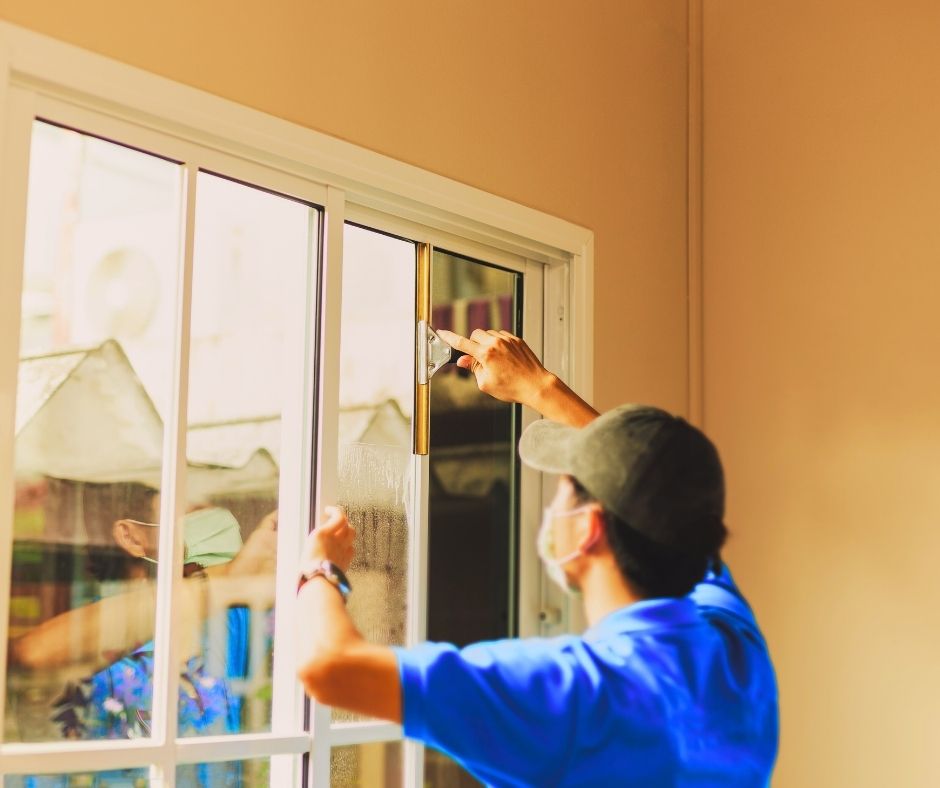
The on-site consultation is where the abstract turns concrete. A trained installer walks the home, notes each window that matters, identifies the glass type at each opening, checks orientation and exposure through the day, and asks about the specific complaints the homeowner is trying to solve. Single-pane windows in an older Radcliff home get one recommendation. Dual-pane low-e units in a newer Elizabethtown home get another. Tempered glass in a shower window or a large sliding glass door gets a third. The recommendation is written up with pricing shared before any work begins, so the homeowner knows the number before the truck comes back to install. The installation itself uses a wet application method. The film is cut to the glass, the pane is cleaned to a controlled surface, and a solution allows the installer to position the film precisely before the adhesive sets. That method is why the finish looks clean, why bubbles do not form, and why the film does not shift over time.

Sun Tint's Approach to Home Window Tinting in Radcliff

Sun Tint has installed window film across Radcliff, Elizabethtown, Vine Grove, Fort Knox area housing, and the surrounding Hardin County market for over forty years. The company opened in 1986 and has grown to six locations across Kentucky and Southern Indiana, with the Radcliff branch located at 1690 S Dixie Blvd along the US 31W corridor. Sun Tint is a multiline dealer, which means the shop carries and installs select films from 3M, LLumar, Madico, Sunscape, Huper Optik, V-KOOL, SunTek, ASWF, Solar Gard, Sun Gard, Wincos, and Hanita. That range matters because it lets the recommendation fit the glass rather than the other way around. A homeowner with modern low-e dual-pane units gets a different film than a homeowner with original single-pane sash windows, and both get the product that actually fits their situation.

Every home window tinting project starts with a free, no-obligation on-site consultation. A trained installer identifies the glass type on each window that matters, notes orientation and exposure, and writes up a clear recommendation with pricing shared before work begins. The installation uses a professional wet application method for a clean, bubble-free finish. Scheduling is flexible, mobile service is available across the market, and the pricing conversation is transparent from the first visit. Homeowners across 40160, 40159, Vine Grove 40175, Elizabethtown 42701 and 42702, Fort Knox 40121, Rineyville 40162, and Cecilia 42724 can reach the Radcliff office at (270) 390-4446 to schedule the consultation. For a home in Hardin County that is losing summer comfort and money to untreated glass, home window tinting is the surface-level intervention that changes both.

Redirect to:


Frequently Asked Questions

For Hardin County homes with west or south exposures, home window tinting pays back in three ways at once: lower cooling load through humid Kentucky summers, less ultraviolet reaching hardwoods and upholstery, and reduced glare on TVs and monitors. The exact energy return depends on the film, the glass, and the exposures being treated. A free on-site consultation identifies which windows are actually driving the load.
Modern ceramic and spectrally selective residential films cut heat and ultraviolet aggressively while letting most visible light through, so rooms stay bright. The visible and infrared bands are optically distinct and can be filtered separately. A film that looks nearly clear from inside a Radcliff living room can still block a substantial share of the felt heat. Sample panels during the consultation confirm how the film reads on the specific glass.
Only if the wrong film is applied to the wrong glass. A highly reflective film on the wrong dual-pane insulated glass unit can drive thermal stress and, over time, shorten the perimeter seal life. A ceramic or spectrally selective film matched correctly to the same unit does not create that risk. The on-site consultation identifies glass type, coating, and exposure before recommending a film.